
Available is not the same as working
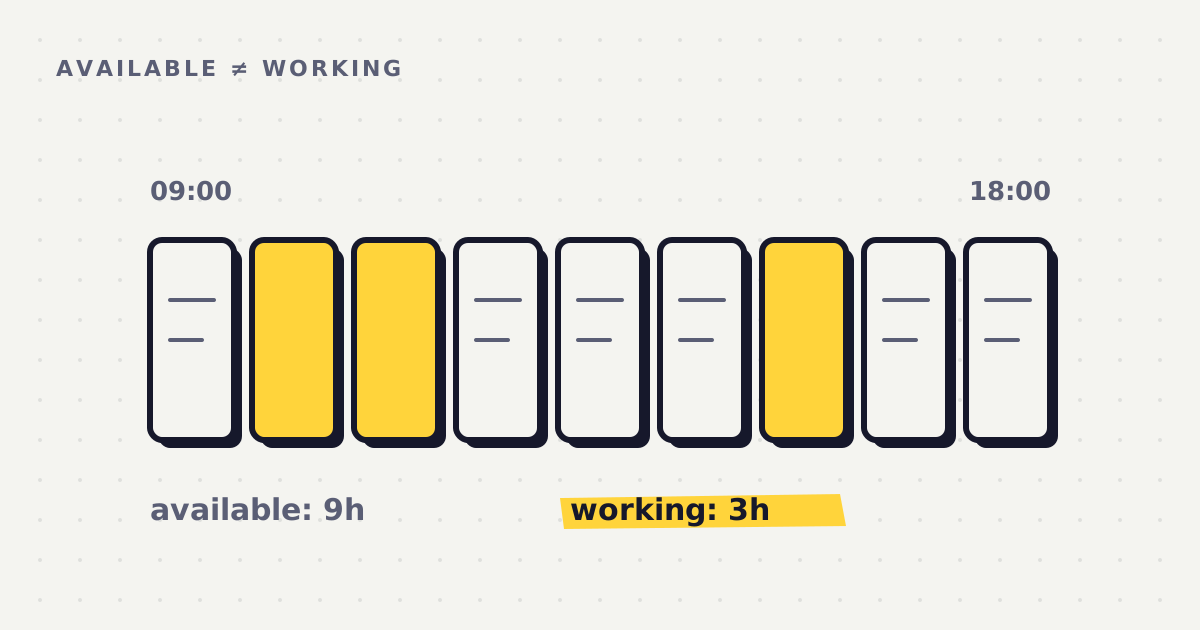
Ask someone how long they worked yesterday and you'll usually get the number of hours between sitting down and getting up. Nine hours. Ten on a bad day, which people say as though it were a good one.
That number measures something real, but it isn't work. It's availability: the hours during which work could have happened. What actually happened inside them is a separate question, and almost nobody has the answer written down.
The gap you can't see from inside the day
Inside any given hour, everything feels like work. Reading about the problem feels like work. Tidying the notes about the problem feels like work. Replying to the message that's vaguely related to the problem feels like work. None of it is the problem.
By the evening those hours have blended into one smooth block labelled "worked on the project", and the memory that survives is the effort, not the output.
10:30 AM – 11:00 AM (30m): Scrolling Twitter (oops).
Two lines like these, written at the time, are worth more than any amount of end-of-day reflection. The second one would never survive to the evening on its own. It gets absorbed into the first.
Why writing it down changes the number
A written log doesn't make you work harder. What it does is make the gap between available and working visible while you can still do something about it. Once you know that a third of Tuesday went to preparing to start, you stop counting preparation as progress.
You don't need to work more hours. You need to know which of the hours you already work were real.
That's the whole idea behind Whatcha Doing: interrupt, ask, write it down, and read the week back against what you said it was for.
Find out what you actually did this week. The first week is free.
Download free